Key Takeaways
- Sparks, loud hums, a burnt smell, or cold food may signal a failed microwave part.
- Stop using the microwave and unplug it if you see sparks, damage, or smell burning.
- A cracked waveguide cover, damaged wire, or faulty door latch may need replacement. Do not use the oven until it is checked.
- Repeated issues need prompt microwave repair from a trained technician. Never open the cabinet because high-voltage parts can hold power.
- Key Takeaways
- How to Know When Microwave Repair Parts Need Replacement
- Signs You Need Microwave Replacement Parts
- Common Microwave Repair Parts and Their Warning Signs
- Key Microwave Repair Parts to Check
- When Microwave Repair Is Safer Than DIY Part Replacement
- When to Choose Professional Microwave Repair
- Summary: Choosing the Right Microwave Repair Solution
- Choosing Safe Microwave Repair Service
- Frequently Asked Questions
- What signs show that a microwave part needs replacement?
- What should we do if the microwave smells burnt?
- When should we replace a microwave door switch?
- Can we open the microwave cabinet to check its parts?
How to Know When Microwave Repair Parts Need Replacement
A microwave repair need often starts with a small warning sign. So, watch for sparks, loud hums, or food that stays cold. The FDA microwave safety guide warns users not to operate damaged ovens.
However, a burnt smell may point to a damaged waveguide cover or wire. A cracked cover can spread heat in the wrong way. Then, stop using the oven and unplug it before you check the outside.
Signs You Need Microwave Replacement Parts
Sparks inside the oven can show a worn rack, metal part, or waveguide cover. In fact, repeated sparks call for prompt microwave repair from a trained tech. You should never open the cabinet because high voltage parts can hold power.
Next, check for a door that will not close or latch with ease. A damaged door switch can stop the oven from starting or cause unsafe heating. In short, A TO Z IN HOME APPLIANCE REPAIR can test the switch, motor, fuse, and control board.
Uneven heating may signal a weak magnetron, bad diode, or worn turntable motor. Also, replace a cracked glass tray or broken roller ring before use. You can find more care tips in our guide to caring for your microwave.
Still, not every fault needs a new part right away. A trained tech can test each part and match the correct model number. Therefore, choose microwave repair when the unit shows safety risks, poor heat, or repeated faults.
Common Microwave Repair Parts and Their Warning Signs
Key Microwave Repair Parts to Check
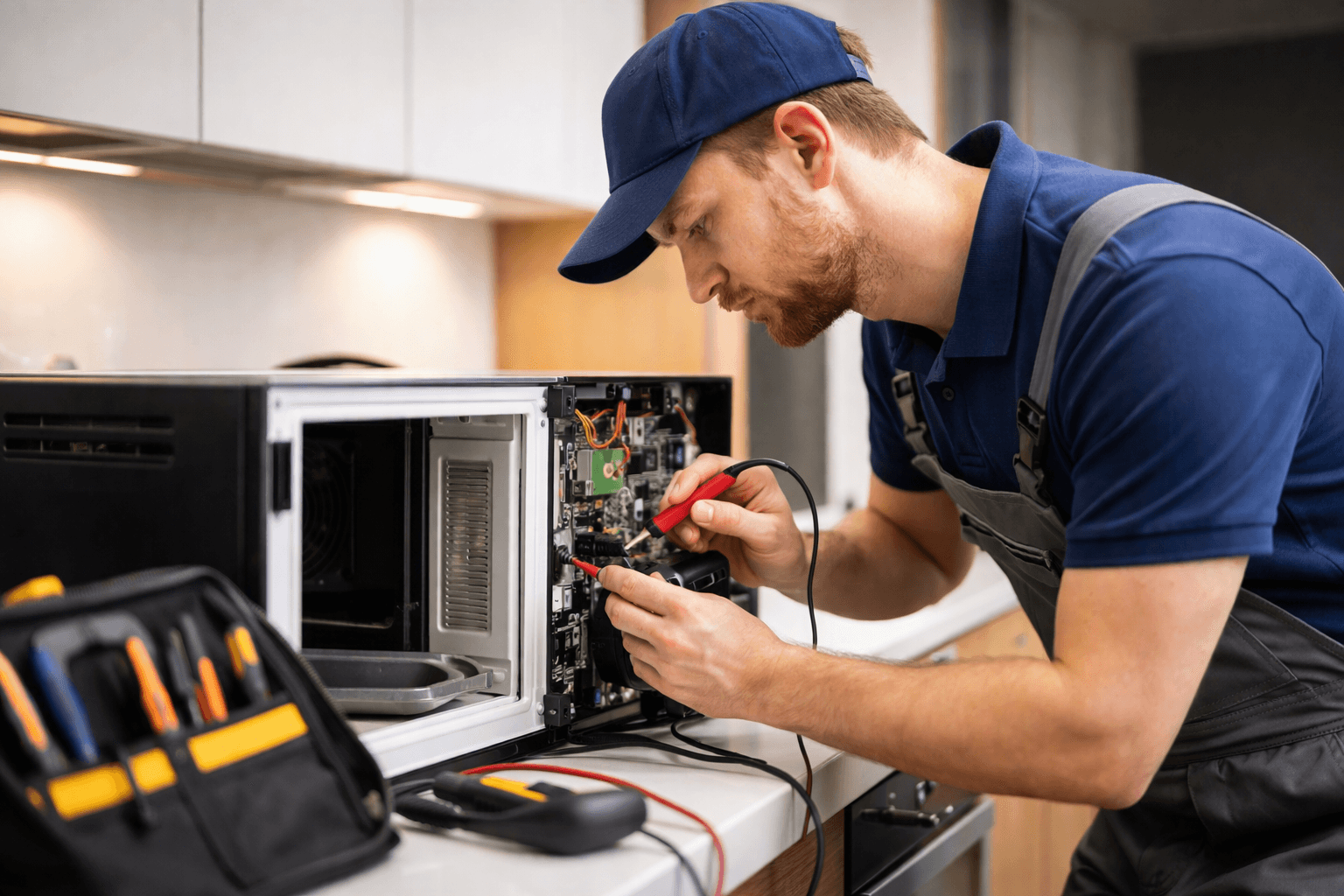
Microwave repair often starts with a close look at key parts. First, check the magnetron, which creates the heat that cooks food. Then, note any loud hum, weak heat, or food that stays cold.
The high-voltage diode helps power the magnetron during use. Also, a bad diode may cause sparks, a burning smell, or no heat. A trained tech can test this part with the right tools.
The capacitor stores a strong electrical charge inside the unit. However, a failed capacitor may cause a loud buzz or a blown fuse. Never touch this part, even after you unplug the microwave.
The door switch tells the unit when the door closes. Next, watch for a unit that will not start or stops when you move the door. Loose latches can also point to a worn switch or door part.
Control boards manage the timer, buttons, light, and cooking cycles. In fact, frozen buttons, random stops, or a blank display may show board trouble. A tech can check the board before you buy a costly part.
The turntable motor and drive guide help food heat with ease. Therefore, a plate that will not turn may need a new motor, guide, or tray. Clean spills first, since food bits can block the drive.
Before you seek microwave repair, unplug the unit and check its cord and outlet. In addition, avoid opening the case, since hidden parts can hold deadly voltage. Read our microwave care tips for safe upkeep.
At A TO Z IN HOME APPLIANCE REPAIR, we inspect each part and explain the best fix. As a result, you can avoid guesswork and restore safe cooking. Call for microwave repair when sparks, smoke, or poor heat continue.
When Microwave Repair Is Safer Than DIY Part Replacement
Microwaves can look simple, but they hold high voltage inside. Also, some parts can shock you even after you unplug the unit. A small mistake can cause burns, fire, or serious injury.
DIY work may suit simple tasks, such as cleaning the door seal. However, never open the outer case or touch inner parts. These parts include the capacitor, magnetron, diode, and wiring.
Home repair becomes unsafe when the microwave sparks or smells like smoke. So, unplug the unit and keep it away from use. A damaged power cord also needs quick help from a trained pro.
When to Choose Professional Microwave Repair
Call A TO Z IN HOME APPLIANCE REPAIR when the unit runs but does not heat. In fact, this fault often points to a bad magnetron, diode, or high-voltage part. These parts need the right tools and skill to test safely.
A cracked door or broken latch also creates a safety risk. Therefore, stop using the microwave until a pro checks the seal and switches. A loose door can let harmful energy escape during use.
Repair can also help when the turntable stops, the keypad fails, or the fan stays on. Instead of guessing, let a trained tech find the root cause. This choice can prevent more damage and lower the risk of a repeat fault.
First, read our guide on simple microwave care tips for safe tasks you can do at home. Next, call us when the problem involves wiring, power, heat, or the inner case.
Microwave repair protects your home when a fault reaches high-voltage parts. Above all, safety matters more than saving a few dollars on a risky part swap. Trust A TO Z IN HOME APPLIANCE REPAIR for careful testing and safe service.
Summary: Choosing the Right Microwave Repair Solution
Choosing the right microwave repair option can protect your budget and your home. Also, A TO Z IN HOME APPLIANCE REPAIR can check the unit and find the real cause.
A skilled technician can test the door, keypad, motor, and power parts. Therefore, we can suggest a safe fix instead of a quick guess.
One small issue may need a simple part or a wire check. However, sparks, smoke, or a burning smell need fast service.
Our team can explain the repair cost before work starts. In fact, clear pricing helps you compare repair with full replacement.
Choosing Safe Microwave Repair Service
Check the unit’s age, brand, and past service record before you choose. For example, an older unit may cost more to fix than replace.
Never open the microwave cabinet or touch high-voltage parts at home. Instead, let a trained technician handle risks that basic cleaning cannot solve.
Good microwave repair also includes a test after the work ends. Likewise, our team checks heating, timing, the door seal, and key controls.
You can lower future costs with simple care and quick action. In short, wipe spills, keep vents clear, and follow our microwave care tips.
Call A TO Z IN HOME APPLIANCE REPAIR when the unit stops heating or acts oddly. Above all, choose a trusted local team that values safe work and honest advice.
A timely service visit may help prevent damage to other parts. As a result, you can restore safe cooking and avoid a larger appliance bill.
Frequently Asked Questions
What signs show that a microwave part needs replacement?
Look for sparks, loud hums, burnt smells, or food that stays cold. Also, watch for a door that will not close or latch. These signs often mean microwave repair parts need a trained technician’s review.
What should we do if the microwave smells burnt?
A burnt smell can point to a damaged waveguide cover, wire, or other part. However, stop the oven, unplug it, and check only the outside. Then, call A TO Z IN HOME APPLIANCE REPAIR for safe microwave repair.
When should we replace a microwave door switch?
Replace a door switch when the oven runs only after repeated button presses. Also, stop using the oven if the door looks bent, cracked, or loose. A trained technician can test the switch and install the right part.
Can we open the microwave cabinet to check its parts?
Never open the microwave cabinet to inspect parts. In fact, high voltage parts can hold power after you unplug the oven. So, let a trained technician test and replace unsafe parts.