Key Takeaways
- Start dishwasher troubleshooting by checking the circuit breaker, power cord, water valve, and door latch.
- Clean the filter and spray arms. Make sure the arms can turn freely to help dishes come out clean.
- Check under the sink for a bent drain hose and look for standing water inside the tub.
- Do not pull hard on hoses or loose wires. For energy-saving tips, review the ENERGY STAR dishwasher guide.
- Key Takeaways
- Dishwasher Troubleshooting: Start With Basic Checks
- Check Water Flow and Drain Parts
- Dishwasher Troubleshooting for Cleaning and Drainage Problems
- Dishwasher Troubleshooting for Drainage Issues
- How to Fix Dishwasher Leaks, Noise, and Door Issues
- Dishwasher Troubleshooting for Door Problems
- Dishwasher Troubleshooting Summary: When to Call A TO Z IN HOME APPLIANCE REPAIR
- When Dishwasher Troubleshooting Needs Expert Help
- Frequently Asked Questions
- Why does my dishwasher not start?
- Why does my dishwasher leave dishes dirty?
- Why does my dishwasher not drain?
- Why does my dishwasher not fill with water?
Dishwasher Troubleshooting: Start With Basic Checks
Dishwasher troubleshooting can save time when your machine stops cleaning well. Also, check the power, water supply, and door latch first. For background on efficient dishwashers, visit ENERGY STAR’s dishwasher guide.
Begin by checking the circuit breaker and power cord. Then, make sure the water valve sits fully open. Next, press the door closed until the latch clicks.
Check the filter for food, grease, or other debris. Also, clear the spray arms and make sure they can turn. If the arms stay blocked, the dishwasher may leave dishes dirty.
Check Water Flow and Drain Parts
Start by looking under the sink for a bent drain hose. However, do not pull hard on the hose or loose wiring. Look for standing water at the bottom of the tub.
In fact, a clogged filter often causes poor cleaning and bad smells. Then, run a short cycle after you clean the filter and spray arms. For more care tips, read our dishwasher maintenance guide.
Call A TO Z IN HOME APPLIANCE REPAIR if basic checks do not fix the issue. We can inspect the pump, inlet valve, heater, and control board. Dishwasher troubleshooting works best when you follow safe steps and stop before a repair becomes risky.
Dishwasher Troubleshooting for Cleaning and Drainage Problems
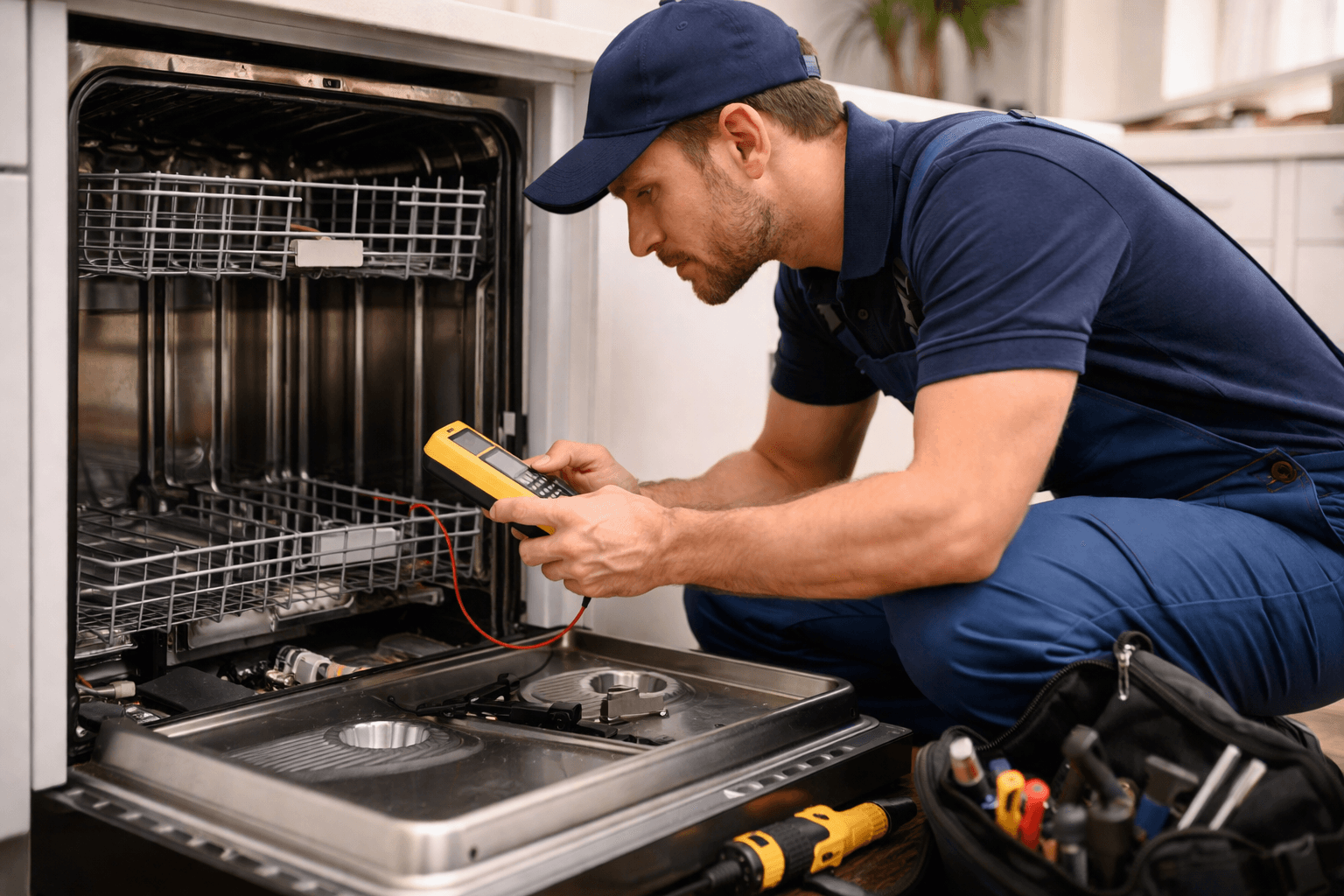
Dishwasher troubleshooting starts with the filter, spray arms, and drain area. First, turn off the power and remove the lower rack.
Check the filter for food, glass, or grease. Next, rinse the filter under warm water and scrub it with a soft brush.
Look at the spray arms for blocked holes. So, clear each hole with a toothpick and spin the arms by hand.
A blocked drain can leave dirty water in the tub. However, remove standing water with a cup before checking the drain opening.
Dishwasher Troubleshooting for Drainage Issues
Clear food bits near the drain and check the drain hose under the sink. In fact, a bent hose can stop water from leaving the dishwasher.
Make sure the air gap has no food or grease inside. Then, run the sink faucet and test the dishwasher on a short cycle.
Watch for leaks, odd sounds, or water that stays in the tub. Therefore, stop the cycle if the pump runs but water does not drain.
Use our dishwasher maintenance tips to help prevent repeat problems. Also, avoid harsh cleaners that can harm seals and parts.
If cleaning does not help, the drain pump, hose, or valve may have a fault. A TO Z IN HOME APPLIANCE REPAIR can test these parts and find the cause.
Do not reach into the unit while it has power. In short, call A TO Z IN HOME APPLIANCE REPAIR when the dishwasher leaks, smells hot, or trips the breaker.
How to Fix Dishwasher Leaks, Noise, and Door Issues
Start with dishwasher troubleshooting when you find water near the unit. Also, turn off power and water before you inspect any part. Check the door seal, drain hose, and water inlet for cracks or loose links.
A worn door gasket can let water escape during each wash. Next, clean the gasket with warm water and replace it if you see splits.
Loose dishes, a bent spray arm, or a blocked filter can cause loud sounds. However, a grinding noise may point to a bad pump or motor. Remove dishes and clean the filter before you book service.
Dishwasher Troubleshooting for Door Problems
A door that will not close can stop the dishwasher from running. First, check for racks, dishes, or silverware that block the latch. Then, inspect the latch for damage and make sure the unit sits level.
A loose hinge can make the door drop or sit out of line. Also, avoid forcing the door, since this can damage the latch and seal.
Use dishwasher troubleshooting to find simple causes before you call for help. In fact, our team at A TO Z IN HOME APPLIANCE REPAIR can test leaks, pumps, valves, and door parts.
Clean the filter often to help prevent clogs, odors, and poor draining. For more care tips, read our guide to preventive dishwasher maintenance. If the unit still leaks or makes harsh sounds, stop using it until a trained tech checks it.
Dishwasher Troubleshooting Summary: When to Call A TO Z IN HOME APPLIANCE REPAIR
Dishwasher troubleshooting can solve small problems, such as poor cleaning or odd sounds. First, turn off the unit and check the power, door latch, and water supply.
Clean the filter and spray arms to remove food bits and hard water buildup. However, do not take apart parts unless the owner’s guide gives clear steps.
Call A TO Z IN HOME APPLIANCE REPAIR when the dishwasher leaks, will not drain, or will not start. Also, seek help when the unit trips the breaker or makes a loud grinding sound.
Our team can test the pump, motor, valve, drain hose, and control board. In fact, quick service may stop a small fault from causing more damage.
When Dishwasher Troubleshooting Needs Expert Help
Stop using the dishwasher if you smell burning, see sparks, or find water near wires. Therefore, keep children away and shut off the power before you call.
We also help when dishes stay dirty after basic care and soap changes. Meanwhile, you can review our dishwasher care tips for safe daily steps.
Older units may need repeated repairs, costly parts, or more water than newer models. In short, A TO Z IN HOME APPLIANCE REPAIR can explain repair costs and replacement choices.
Do not guess when a hidden leak or wiring fault causes the trouble. Contact A TO Z IN HOME APPLIANCE REPAIR for clear advice and skilled dishwasher service.
Frequently Asked Questions
Why does my dishwasher not start?
For dishwasher troubleshooting, first check the circuit breaker and power cord. Then, close the door until the latch clicks.
Why does my dishwasher leave dishes dirty?
Also, clean the filter to remove food, grease, and other debris. Next, clear the spray arms and make sure they can turn.
Why does my dishwasher not drain?
However, check under the sink for a bent drain hose. If water remains in the tub, inspect the filter and drain area.
Why does my dishwasher not fill with water?
In fact, check that the water supply valve sits fully open. Also, avoid pulling hard on hoses or loose wires.