Key Takeaways
- Dryer overheating may cause a hot drum, slow drying, or scorched clothes. Stop the dryer if you smell burning or feel extreme heat.
- Clean the lint screen after every load. Check the vent hose for lint, bends, and crushed spots.
- A blocked outside vent can trap hot air inside the dryer. Make sure the vent flap opens during a cycle.
- Worn drum rollers, a damaged belt, or a weak motor may create extra heat. Have worn parts checked and replaced by a trained repair professional.
- Key Takeaways
- Dryer Overheating: Signs and Common Causes
- Common Causes of Dryer Overheating
- Quick Dryer Overheating Fixes You Can Try
- Simple Dryer Overheating Checks
- When to Stop Using an Overheating Dryer
- When Dryer Overheating Needs Professional Repair
- Signs You Need Professional Dryer Repair
- Dryer Overheating Safety Tips and Key Takeaways
- Dryer Overheating Safety Tips
- Frequently Asked Questions
- What are the signs of dryer overheating?
- What should we do when a dryer overheats?
- Can a blocked vent cause dryer overheating?
- When should we call a dryer repair professional?
Dryer Overheating: Signs and Common Causes
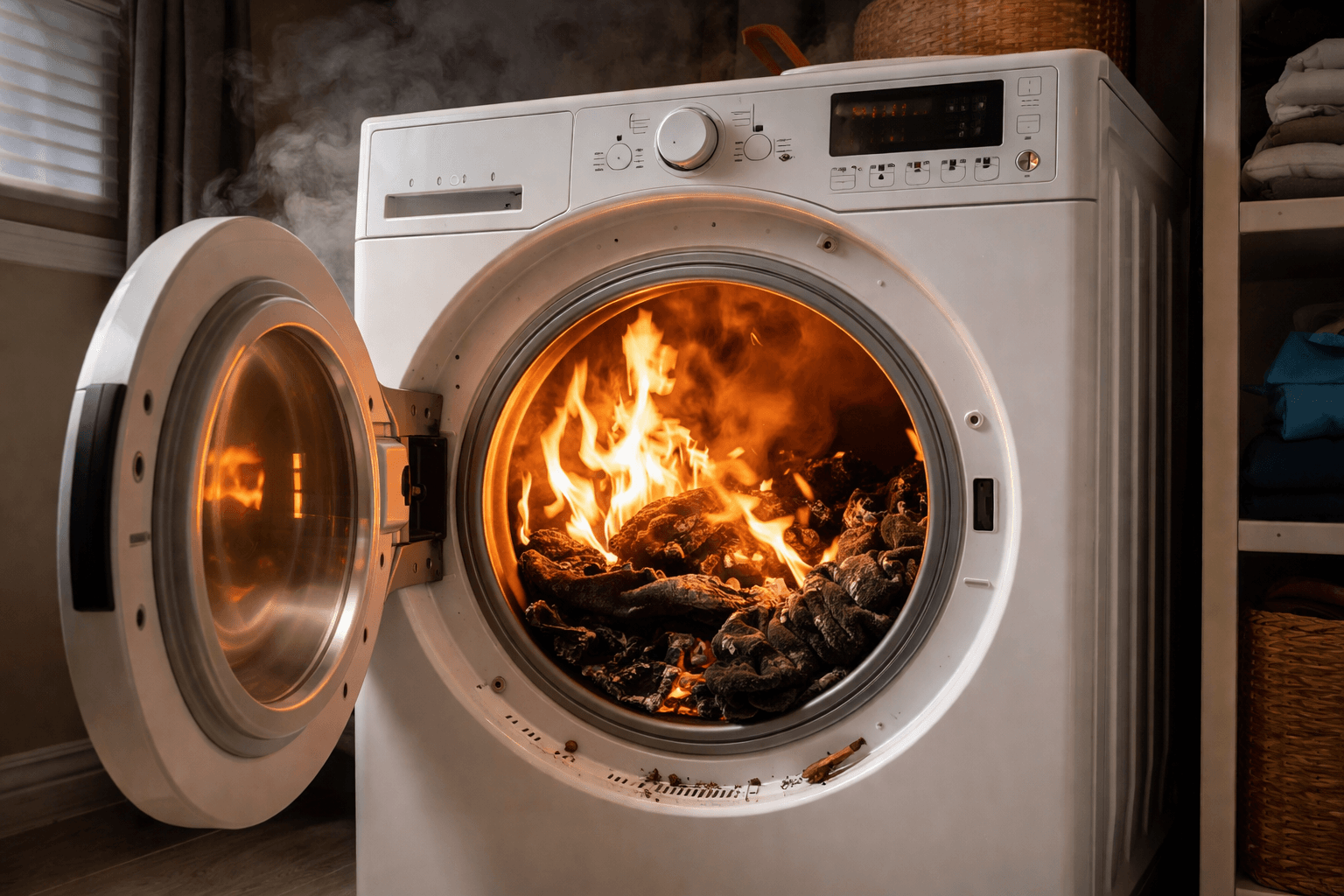
Dryer overheating can turn a simple laundry task into a safety risk. Also, stop the dryer if you smell burning or feel extreme heat. A hot drum, slow drying, and scorched clothes often signal poor airflow or a worn part.
First, clean the lint screen after each load. Also, check the vent hose for lint, bends, or crushed spots. The U.S. Fire Administration explains dryer fire risks and stresses the need for regular lint removal.
Common Causes of Dryer Overheating
A blocked vent traps hot air inside the dryer. For example, inspect the outside vent and make sure its flap opens during a cycle. You can also review our dryer maintenance tips for more warning signs.
Worn drum rollers, a bad belt, or a weak motor can create extra heat. However, a broken thermostat may fail to control the dryer temperature. These parts need testing before you replace them.
Dryer overheating may also come from overloading the drum. In addition, large loads block air flow and make clothes stay damp. Run smaller loads and leave space for clothes to move.
If the dryer still runs hot, unplug it and stop using it. Therefore, contact A TO Z IN HOME APPLIANCE REPAIR for a safe check. We can find the cause, repair damaged parts, and help protect your home from fire risk.
Quick Dryer Overheating Fixes You Can Try
Simple Dryer Overheating Checks
Unplug the dryer before you start any checks. Also, clean the lint screen with warm water and mild soap. A blocked screen can slow airflow and raise heat.
Check the vent hose behind the dryer for bends or crushed spots. Next, pull the dryer away from the wall and clear the hose. Then inspect the outside vent for lint or debris.
Make sure the dryer has space around all sides for air flow. Therefore, move boxes, clothes, and other items away from the unit. Good air flow helps prevent dryer overheating during each load.
Run smaller loads and remove clothes when the cycle ends. In addition, avoid drying heavy items with light fabrics in one load. You can find more tips in our dryer maintenance guide.
When to Stop Using an Overheating Dryer
Stop the dryer if you smell burning or see smoke near the vent. For example, a hot plug, melted cord, or dark mark needs fast attention. Do not use the dryer again until a trained tech checks it.
Check the wall outlet and power cord for damage, but do not repair them yourself. So, call A TO Z IN HOME APPLIANCE REPAIR when basic cleaning does not help. A faulty thermostat, heating part, or motor may cause dryer overheating.
Keep the dryer unplugged while you wait for service. In short, quick cleaning can improve air flow, but it cannot fix damaged parts. Safe repairs can protect your home and help your dryer run well.
When Dryer Overheating Needs Professional Repair
Dryer overheating can signal a blocked vent, worn belt, bad thermostat, or weak motor. Also, excess heat can damage clothes and raise fire risk. Stop the dryer if you smell burning, see smoke, or feel extreme heat.
Then, unplug the unit and keep the door closed until it cools. A simple lint clean may solve mild heat issues. However, deep lint inside the vent needs careful cleaning and a full airflow check.
Check the outside vent flap while the dryer runs. In addition, weak airflow can point to a crushed hose or a clogged vent line. Our team at A TO Z IN HOME APPLIANCE REPAIR can test these parts and find the cause.
Signs You Need Professional Dryer Repair
Call for service when the dryer stays hot after cleaning the lint screen. Also, book a repair if clothes take too long to dry or the drum stops during a cycle. These signs may point to a motor, sensor, or heating part issue.
Do not keep running a dryer that trips the breaker. Therefore, let a trained repair expert inspect the wiring, thermostat, and heating system. A skilled check can help prevent fire damage and costly repairs.
For safe care, follow our guide on common dryer maintenance signs. Next, review our tips on installing a new dryer if your unit needs replacement. In short, prompt help keeps dryer overheating from becoming a larger home hazard.
Dryer Overheating Safety Tips and Key Takeaways
Dryer Overheating Safety Tips
Dryer overheating can create a fire risk and damage your clothes. Also, stop the dryer if you smell burning or see smoke. Keep children away until the unit cools.
Clean the lint screen before every load. Next, check the vent hose for lint, bends, or crushed spots. A clear vent helps hot air leave the dryer.
Inspect the outside vent flap often. In fact, the flap should open when the dryer runs. Remove lint from the vent area to support safe airflow.
Do not overload the drum with wet clothes. Instead, split large loads into smaller loads. Small loads dry faster and place less strain on the machine.
Check the dryer plug, cord, and outlet for heat marks. However, do not touch damaged wires or loose parts. Call A TO Z IN HOME APPLIANCE REPAIR for safe service when you find damage.
Never run the dryer while you sleep or leave home. Therefore, you can act fast if the unit makes odd sounds or gets too hot. For more help, read our guide to common dryer maintenance signs.
Professional help makes sense when dryer overheating returns after cleaning. Also, a faulty thermostat, motor, belt, or heating part may cause the issue. Turn off power before any repair work.
Use a strong vent connection when you install a new unit. In addition, follow our guide on how to properly install a new dryer. In short, clean airflow and quick repairs help keep your home safe.
Frequently Asked Questions
What are the signs of dryer overheating?
Common signs include a hot drum, slow drying, burning smells, and scorched clothes. Also, stop the dryer if it feels very hot or makes odd sounds.
What should we do when a dryer overheats?
First, turn off the dryer and unplug it after the drum stops. Then, clean the lint screen and check the vent hose for bends or crushed spots.
Can a blocked vent cause dryer overheating?
For example, a blocked vent traps hot air and often causes dryer overheating. Next, check the outside vent and confirm its flap opens during a cycle.
When should we call a dryer repair professional?
Call A TO Z IN HOME APPLIANCE REPAIR if cleaning does not solve the heat issue. However, seek help at once if you smell burning, see smoke, or suspect a bad belt, motor, or thermostat.